How Fast Do You Lose Weight on Keto?
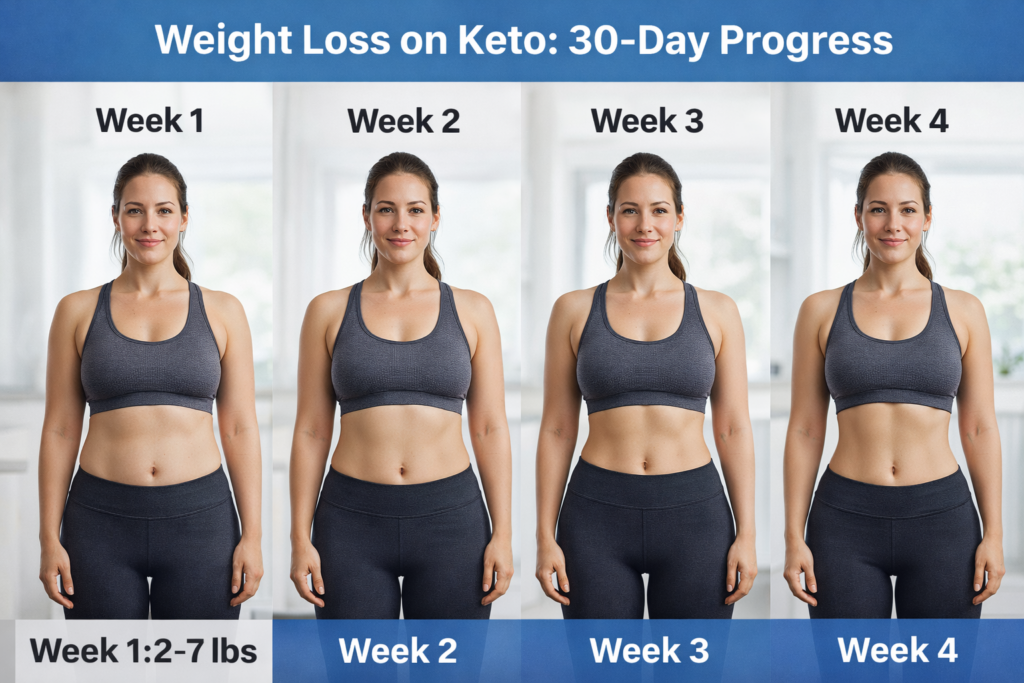
Most people lose between 5 and 15 pounds during the first 30 days on the keto diet. The first week often produces the fastest drop due to water weight, while the following weeks gradually shift toward real fat loss as the body adapts to burning fat for energy.
Introduction
One of the first questions people ask before starting the ketogenic diet is simple:
“How fast will I actually lose weight on keto?”
The short answer is that results can appear surprisingly fast. However, the first month typically follows a predictable pattern that many beginners don’t fully understand.
Some people see the scale drop dramatically during the first week, while others experience slower progress before fat loss begins to accelerate.
Understanding how keto weight loss actually works helps set realistic expectations and keeps you motivated during the early stages of the diet.
Let’s take a closer look at what really happens during your first 30 days on keto.
Why Weight Loss on Keto Can Feel Faster
The ketogenic diet works differently from most traditional diets.
Instead of relying on carbohydrates for energy, keto shifts the body into a metabolic state called ketosis, where fat becomes the primary fuel source.
When carbohydrate intake drops significantly, several changes occur inside the body:
- insulin levels decrease
- glycogen stores become depleted
- the body releases excess water
- fat oxidation increases
Because glycogen binds to water in the body, the initial drop on the scale often includes water weight loss.
This is why keto results can appear faster than many other diets during the first week.
However, long-term results depend on metabolic adaptation and consistency.
If you’re new to keto, it may help to first understand how the ketogenic diet works and how ketosis triggers fat burning.
What to Expect During the First 30 Days of Keto
Most people experience weight loss on keto in phases rather than one steady drop.
Below is a typical timeline many beginners experience.
Week 1: Rapid Weight Drop (Mostly Water)
The first week often produces the most dramatic change on the scale.
Many beginners lose:
2–7 pounds during the first week.
However, most of this early drop comes from water weight rather than body fat.
As glycogen stores are depleted, the body releases water previously stored with carbohydrates.
Common experiences during the first week include:
- reduced bloating
- increased thirst
- temporary fatigue
- mild headaches
- sugar cravings
This stage is often referred to as the keto adaptation phase.
Your body is learning to shift from glucose metabolism to fat metabolism.
Week 2: Metabolic Adaptation
By the second week, many people begin noticing the first real benefits of ketosis.
The body becomes more efficient at using fat for energy.
Typical changes include:
- reduced hunger
- fewer sugar cravings
- improved mental clarity
- more stable energy levels
At this stage, weight loss may slow slightly or even plateau for a short period.
This is completely normal.
Your body is transitioning from rapid water loss to actual fat burning.
Week 3: Fat Loss Becomes Noticeable
Around the third week, physical changes often become easier to notice.
Many people report:
- clothes fitting looser
- reduced abdominal bloating
- improved digestion
- less frequent snacking
Because the body is now better adapted to burning fat, weight loss tends to become more consistent.
For many beginners, this is when real fat loss begins accelerating.
Week 4: Momentum and Habit Formation
By the end of the first month, keto often becomes easier to maintain.
Many beginners notice:
- improved appetite control
- more stable daily energy
- fewer cravings for sugary foods
- steady fat loss
Average weight loss during the first month typically ranges between:
5–15 pounds depending on starting weight and lifestyle habits.
More importantly, the diet begins to feel less restrictive and more automatic.
How Much Weight Can You Realistically Lose on Keto?
Weight loss results vary widely from person to person.
Several factors influence progress, including:
- starting body weight
- daily calorie intake
- carbohydrate restriction
- sleep quality
- stress levels
- physical activity
- hormonal balance
On average, many beginners lose around:
8–12 pounds during their first month on keto.
People with higher starting body weight often see faster early results.
However, sustainable fat loss is usually more important than rapid short-term changes.
Why Some People Lose Weight Slower on Keto
Not everyone experiences rapid weight loss immediately.
In many cases, slower progress is caused by common beginner mistakes.
Examples include:
- hidden carbohydrates in packaged foods
- eating excessive protein
- overconsuming keto snacks
- ignoring electrolyte balance
- poor sleep quality
- chronic stress
These factors can interfere with ketosis and slow fat burning.
Learning to identify common keto mistakes beginners make can dramatically improve results.
Why Carbohydrate Tracking Matters
Another important factor in keto weight loss is carbohydrate tracking.
Many beginners mistakenly track total carbohydrates instead of net carbs.
Net carbs represent the carbohydrates that actually affect blood sugar and ketosis.
Understanding how to calculate net carbs and read nutrition labels can make it easier to maintain ketosis and support fat burning.
Even small hidden carb sources can add up throughout the day and slow progress.
The Real Benefit of the First 30 Days
Although many people focus on the number on the scale, the first month of keto offers deeper metabolic benefits.
During this time, the body begins to:
- regulate hunger hormones
- improve insulin sensitivity
- reduce sugar cravings
- stabilize energy levels
- increase metabolic flexibility
These internal changes make fat loss easier over time.
When the body stops relying on constant glucose intake, it becomes more efficient at using stored fat as fuel.
Is Fast Weight Loss on Keto Safe?
For most healthy adults, moderate weight loss on keto is generally considered safe.
Health professionals typically recommend losing:
1–2 pounds of body fat per week.
The rapid drop seen during the first week is mostly water weight, which is a normal metabolic response.
Long-term success depends on maintaining:
- balanced nutrition
- proper hydration
- electrolyte intake
- consistent eating habits
Extreme calorie restriction is not necessary for keto to work.
In fact, overly restrictive dieting can sometimes slow metabolism.
Final Thoughts
So, how fast can you lose weight on keto?
Fast enough to stay motivated, but gradual enough to remain sustainable.
The first 30 days are primarily about metabolic adaptation rather than dramatic fat loss.
As the body becomes more efficient at burning fat for energy, results often become more consistent and easier to maintain.
When followed correctly, keto isn’t just a temporary diet.
It can become a structured nutritional strategy that supports long-term metabolic health.
FAQ
How much weight can you lose in the first week of keto?
Most beginners lose between 2–7 pounds during the first week, mainly due to water loss as glycogen stores are depleted.
How long does it take to start losing fat on keto?
Fat loss typically becomes more noticeable after 2–3 weeks, once the body becomes fully adapted to ketosis.
Is it normal for keto weight loss to slow after the first week?
Yes. The initial drop is often water weight, and the body then transitions into slower but more sustainable fat loss.
Do you have to count calories on keto?
While calorie intake still matters, many people naturally eat fewer calories on keto because the diet helps control hunger and cravings.
Can everyone lose weight quickly on keto?
Results vary based on starting weight, lifestyle habits, stress levels, sleep, and metabolic health.
If you're starting keto and want to maximize your results, these guides can help you avoid common mistakes and understand how the diet works:

• What Is the Keto Diet? A Simple Beginner’s Guide
• Keto for Beginners: What to Eat, What to Avoid, and Why
• The Biggest Keto Mistakes Beginners Make in the First Week
• Net Carbs Explained: How to Read Food Labels Like a Keto Expert
• Keto vs Low Carb: What’s the Real Difference for Fat Loss?
Deixe um comentário