
What Is the Difference Between Keto and Low Carb?
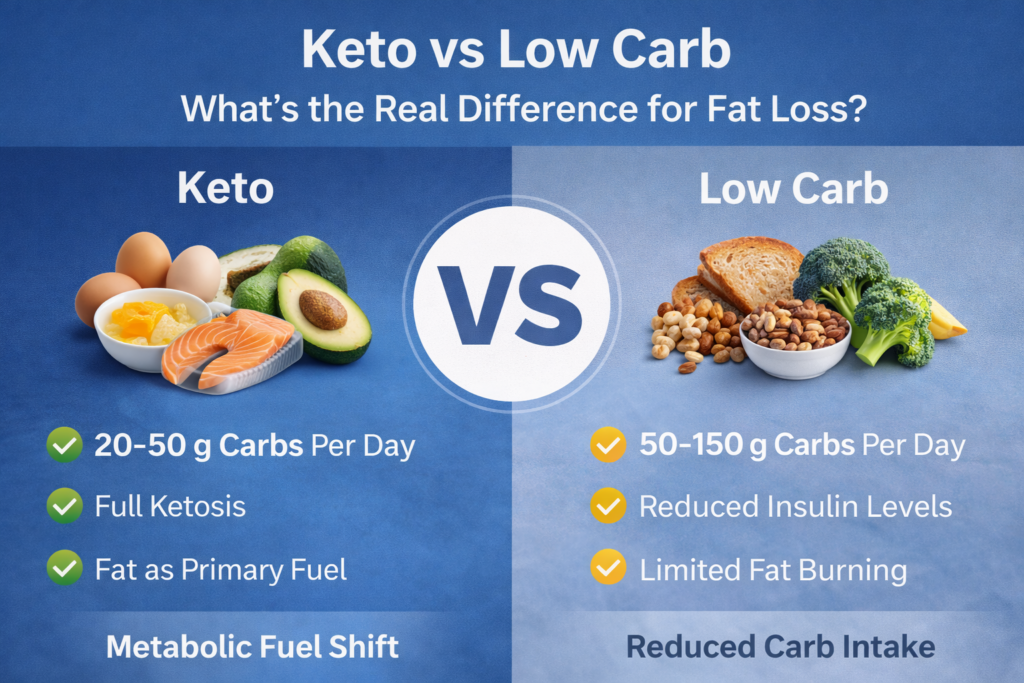
The main difference between keto and low carb diets is the level of carbohydrate restriction and how the body produces energy.
A low-carb diet typically allows 50–150 grams of carbohydrates per day, helping reduce blood sugar spikes and lower calorie intake.
The Ketogenic Diet is much stricter, usually limiting carbs to 20–50 grams per day. This restriction pushes the body into Ketosis, where fat becomes the primary fuel source instead of glucose.
Both approaches can help with fat loss, but keto creates a stronger metabolic shift that may accelerate fat burning for some people.
Introduction
If you’re trying to lose weight, you’ve probably encountered two popular approaches:
Keto
Low Carb
At first glance, they seem almost identical.
Both reduce carbohydrate intake.
Both aim to stabilize blood sugar.
Both can help with fat loss.
But there is a critical difference between them.
Understanding that difference can help you choose the right approach for your body, lifestyle, and long-term goals.
Many people struggle with weight loss not because diets don’t work, but because they don’t fully understand how different dietary strategies affect metabolism.
This article breaks down the real differences between keto and low carb — and how each one impacts fat loss.
What Is a Low Carb Diet?
A low-carb diet simply means reducing carbohydrate intake below the typical Western diet.
Most people following a standard diet consume 250–300 grams of carbohydrates per day.
Low carb reduces that significantly.
Most low-carb plans allow approximately:
- 50–150 grams of carbohydrates daily
- Moderate protein intake
- Moderate to high fat intake
The main goal of low carb is to reduce blood sugar spikes and insulin levels.
When carbohydrates are reduced, several beneficial changes can occur:
- Appetite often decreases
- Blood sugar becomes more stable
- Calorie intake tends to drop naturally
- Energy crashes become less frequent
However, a low-carb diet does not always trigger ketosis.
Your body may still rely on a mix of:
- glucose
- stored glycogen
- fat
for energy.
This makes low carb a flexible and sustainable dietary approach for many people.
But the metabolic changes are typically less dramatic than keto.
What Is the Keto Diet?
The Ketogenic Diet is a more structured version of carbohydrate restriction.
Instead of simply lowering carbs, keto aims to push the body into Ketosis.
Ketosis is a metabolic state where the body begins producing ketones from fat to use as energy.
To reach ketosis, carbohydrate intake must usually stay between:
20–50 grams per day
At this level, the body’s glycogen stores become depleted.
As a result, the body shifts from burning glucose to burning stored fat.
Typical keto macronutrient ratios look like this:
- 70–75% fat
- 20–25% protein
- 5–10% carbohydrates
This macronutrient structure changes how your metabolism operates.
Instead of relying on sugar for quick energy, the body becomes more efficient at using fat as fuel.
How Keto and Low Carb Affect Fat Loss
Both diets can lead to weight loss, but they achieve this through different mechanisms.
Understanding these mechanisms helps explain why some people respond better to one approach than the other.
Low Carb: Appetite Control and Insulin Reduction
Low carb supports fat loss primarily through hormonal regulation and appetite control.
When carbohydrate intake decreases:
- Insulin levels drop
- Blood sugar stabilizes
- Hunger hormones become more balanced
Because insulin is a hormone that signals the body to store fat, reducing insulin can make it easier for the body to access stored fat.
Additionally, low-carb diets often eliminate many processed foods such as:
- sugary snacks
- refined bread
- sugary drinks
- desserts
This alone can significantly reduce calorie intake.
For many people, low carb leads to gradual, steady weight loss.
Keto: A Complete Metabolic Fuel Shift
Keto takes fat loss one step further by creating a metabolic fuel switch.
When the body enters Ketosis, several changes occur:
- The liver produces ketones from fat
- Fat becomes the primary energy source
- Hunger signals often decrease
- Cravings become less intense
- Energy levels become more stable
Because the body is relying heavily on fat for energy, many people experience faster initial fat loss when starting keto.
This effect can be particularly noticeable in individuals with:
- insulin resistance
- metabolic syndrome
- strong sugar cravings
Which Diet Burns More Fat?
Both diets can lead to fat loss.
But the intensity of metabolic change is different.
Low Carb
Benefits:
- More dietary flexibility
- Easier to maintain socially
- Less strict carb tracking
Limitations:
- Fat burning may occur more slowly
- Some people continue relying partially on glucose
Keto
Benefits:
- Strong metabolic shift toward fat burning
- Appetite suppression
- Stable energy levels
Limitations:
- Requires stricter carb restriction
- More planning and consistency
Some people see rapid early weight loss on keto, especially during the first few weeks.
However, long-term results depend primarily on consistency and lifestyle adherence.
Who Should Choose Low Carb?
A low-carb diet may be a better choice if you prefer flexibility.
It often works well for people who:
- want moderate carb intake
- prefer less strict tracking
- eat socially or travel frequently
- struggle with extremely restrictive diets
Low carb can also be easier to maintain as a long-term lifestyle.
Many people successfully transition to low carb after losing weight through other methods.
Who Should Choose Keto?
The Ketogenic Diet may work better for individuals who respond well to clear dietary structure.
Keto may be beneficial if you:
- struggle with intense sugar cravings
- experience frequent hunger
- want a clear metabolic strategy
- want to reach full Ketosis
Because keto creates stronger hormonal changes, it can sometimes help people break through stubborn fat-loss plateaus.
The Biggest Mistake People Make
One of the most common mistakes in weight-loss diets is unintentionally staying in the middle ground between keto and low carb.
Many people think they are following keto, but their carbohydrate intake is too high to enter ketosis.
At the same time, they may be eating too few carbohydrates to feel fully energized.
This creates a frustrating situation where:
- energy levels fluctuate
- cravings persist
- fat loss slows down
Without clear dietary structure, results become inconsistent.
Understanding the difference between keto and low carb helps avoid this problem.
Conclusion
The debate between keto and low carb often focuses on which diet is better.
In reality, both approaches can support fat loss.
The key difference lies in how each diet influences metabolism.
Low carb works by reducing carbohydrate intake and stabilizing blood sugar.
Keto works by creating a deeper metabolic shift toward fat burning through Ketosis.
For some people, low carb provides the flexibility needed for long-term success.
For others, the structure of keto helps eliminate cravings and accelerate fat loss.
Ultimately, the most effective diet is the one you can follow consistently and sustainably.
FAQ
Is keto the same as low carb?
No. Keto is a stricter version of low carb that limits carbohydrates enough to trigger ketosis.
Which diet leads to faster weight loss?
Keto may produce faster initial weight loss because it pushes the body into ketosis. However, long-term results depend on consistency.
Can you switch from keto to low carb?
Yes. Many people use keto for fat loss and later transition to a moderate low-carb lifestyle for maintenance.
How many carbs can you eat on keto?
Most keto diets limit carbohydrates to 20–50 grams per day to maintain ketosis.
Is low carb easier to maintain long term?
For many people, yes. Low carb diets provide more flexibility and are easier to sustain in social situations.
Continue Learning About Keto and Fat Loss
If you’re exploring the differences between keto and low carb, these guides will help you understand the science of fat loss and how to follow a ketogenic lifestyle more effectively.
Take a few minutes to explore these helpful resources:
- Keto for Beginners: What to Eat, What to Avoid, and Why
Learn the essential foods that support ketosis and the common mistakes beginners should avoid. - Net Carbs Explained: How to Read Food Labels Like a Keto Expert
Discover how to calculate net carbs and identify hidden carbohydrates in packaged foods. - How Long Does It Take to Enter Ketosis?
Understand the typical timeline for reaching ketosis and what factors influence the process. - Keto Weight Loss Timeline: What to Expect Week by Week
See how weight loss usually progresses during the first weeks of a ketogenic diet.
Exploring these articles will help you build a stronger understanding of keto, nutrition, and sustainable fat loss.
Deixe um comentário