
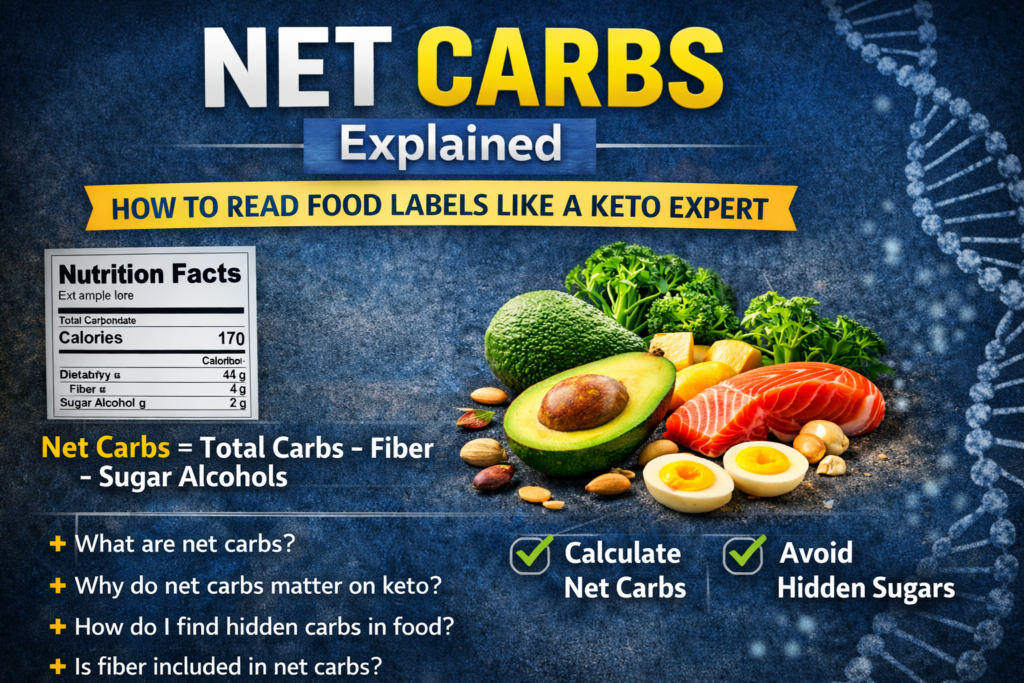
What Are Net Carbs?
Net carbs are the carbohydrates your body actually digests and converts into energy. To calculate net carbs, subtract fiber and certain sugar alcohols from the total carbohydrates listed on a nutrition label. This number is important for people following a keto diet because it helps control carb intake while staying in ketosis.
Net Carbs Explained: How to Read Food Labels Like a Keto Expert
One of the most confusing parts of starting the ketogenic diet is understanding carbohydrates.
You’ve probably seen terms like:
- Total carbs
- Net carbs
- Fiber
- Sugar alcohols
But which one actually matters for ketosis?
Understanding net carbs is one of the most important skills for anyone following a ketogenic diet. It helps you avoid hidden carbs, stay in ketosis, and make smarter food choices.
In this guide, you’ll learn what net carbs are, how to calculate them, and how to read food labels like a keto expert.
What Are Net Carbs?
Net carbs are the carbohydrates that your body actually digests and converts into glucose.
Unlike total carbohydrates, net carbs exclude components that have little to no impact on blood sugar.
These typically include:
- Dietary fiber
- Certain sugar alcohols
Net Carb Formula
The basic formula is simple:
Net Carbs = Total Carbohydrates − Fiber − Sugar Alcohols
Example:
Food label shows:
Total Carbs: 15g
Fiber: 7g
Sugar Alcohols: 3g
Net Carbs = 15 − 7 − 3 = 5g
This means the food contains 5 grams of net carbs that may affect ketosis.
Why Net Carbs Matter on Keto
The ketogenic diet works by drastically reducing carbohydrate intake so the body enters ketosis, a metabolic state where fat becomes the primary fuel source.
Most keto plans recommend staying under:
- 20–30g net carbs per day
Tracking net carbs instead of total carbs gives you more flexibility while still staying in ketosis.
For example:
Vegetables like broccoli, spinach, and avocado contain carbohydrates, but much of it is fiber, which doesn’t spike blood sugar.
That means they can still fit perfectly into a ketogenic diet.
Net Carbs vs Total Carbs
This is where many beginners get confused.
Total Carbs
Total carbohydrates include everything:
- Sugar
- Starch
- Fiber
- Sugar alcohols
Net Carbs
Net carbs only count the carbs that affect blood sugar and insulin levels.
| Type | Includes | Impact on Ketosis |
|---|---|---|
| Total Carbs | All carbohydrates | Not always accurate |
| Net Carbs | Digestible carbs only | Most relevant for keto |
For keto followers, net carbs are usually the number that matters most.
How to Read Food Labels on Keto
Learning to read nutrition labels can instantly improve your success on keto.
Here’s the step-by-step process used by experienced keto dieters.
Step 1: Check Total Carbohydrates
Start by looking at the total carbohydrate number on the nutrition label.
This includes all forms of carbohydrates in the food.
Step 2: Subtract Fiber
Fiber passes through the digestive system without being converted into glucose.
This means it does not affect ketosis.
Subtract the fiber grams from the total carbs.
Step 3: Subtract Sugar Alcohols (Sometimes)
Some sugar alcohols have minimal impact on blood sugar.
Common examples include:
- Erythritol
- Xylitol
- Maltitol
However, not all sugar alcohols behave the same way.
Erythritol typically has almost zero impact, while maltitol may still raise blood sugar.
Many keto experts subtract only erythritol when calculating net carbs.
Step 4: Calculate Net Carbs
After subtracting fiber and appropriate sugar alcohols, the result is your net carb count.
This number determines whether a food fits into your daily keto carb limit.
Hidden Carbs That Kick You Out of Ketosis
One of the biggest challenges for beginners is hidden carbohydrates.
Many foods marketed as “healthy” or even “low carb” can still contain significant sugar.
Common hidden carb sources include:
- Salad dressings
- Protein bars
- Flavored yogurt
- Nut milks with added sugar
- Packaged keto snacks
Even small amounts of hidden sugar can add up quickly throughout the day.
That’s why reading food labels carefully is essential for maintaining ketosis.
Keto-Friendly Foods With Low Net Carbs
To simplify keto meal planning, focus on foods naturally low in net carbs.
Some of the best options include:
Low-Carb Vegetables
- Spinach
- Broccoli
- Cauliflower
- Zucchini
- Kale
Healthy Fats
- Avocados
- Olive oil
- Coconut oil
- Butter
Protein Sources
- Eggs
- Chicken
- Beef
- Salmon
- Tuna
These foods make it easier to stay within your daily carb limit while still getting plenty of nutrients.
Common Net Carb Mistakes Beginners Make
Even experienced keto followers sometimes make mistakes with carb tracking.
Here are the most common ones.
Ignoring Portion Sizes
A food may have only 2g net carbs per serving, but eating three servings increases that number quickly.
Trusting “Keto” Labels
Many packaged foods labeled as keto-friendly still contain hidden sugars or misleading carb calculations.
Always check the label yourself.
Forgetting About Sauces and Condiments
Sauces often contain added sugar.
Examples include:
- Ketchup
- BBQ sauce
- Teriyaki sauce
These small additions can easily push you over your carb limit.
Signs You’re Tracking Net Carbs Correctly
If you’re calculating net carbs properly, you may notice several positive changes:
- Reduced sugar cravings
- Stable energy levels
- Less hunger between meals
- Gradual fat loss
- Improved focus and mental clarity
These signs often indicate that your body has successfully entered ketosis.
How to Make Keto Easier for Beginners
Understanding net carbs is essential, but many beginners still struggle with meal planning and food choices.
Knowing what to eat every day can feel overwhelming at first.
A structured plan can make the process significantly easier.
If you’re trying to simplify keto, the 30-Day Keto Reset was designed to guide beginners step-by-step through the transition into ketosis.
It removes the guesswork by providing meal plans, grocery guidance, and practical strategies that help people stay consistent during the first month of keto.
Final Thoughts
Understanding net carbs is one of the most important skills for anyone following the ketogenic diet.
Once you know how to read food labels and calculate net carbs correctly, staying in ketosis becomes much easier.
Instead of feeling restricted, you gain the confidence to choose foods that support your goals while avoiding hidden sugars that could slow your progress.
Mastering this simple skill can make the difference between struggling on keto and succeeding long-term with a sustainable ketogenic lifestyle.
Frequently Asked Questions About Net Carbs
What are net carbs?
Net carbs are the carbohydrates that the body actually digests and converts into glucose. They are calculated by subtracting fiber and certain sugar alcohols from total carbohydrates.
Why are net carbs important on keto?
Net carbs help determine whether a food will affect blood sugar levels and potentially interrupt ketosis. Most ketogenic diets recommend staying under 20–30 grams of net carbs per day.
Is fiber included in net carbs?
No. Fiber is typically subtracted from total carbohydrates when calculating net carbs because it does not significantly affect blood sugar levels.
Do sugar alcohols count as net carbs?
Some sugar alcohols may affect blood sugar slightly. Many keto dieters subtract erythritol completely but partially count others like maltitol.
What foods have the lowest net carbs?
Foods naturally low in net carbs include leafy greens, broccoli, cauliflower, eggs, meat, fish, avocados, and healthy fats like olive oil.
Related Posts
If you’re exploring how keto works, these guides will help you understand the diet even deeper.
• What Is the Keto Diet? A Simple Beginner’s Guide
• Keto for Beginners: What to Eat, What to Avoid, and Why
• How the Ketogenic Diet Works: The Science Behind Fat Burning
• How Fast Can You Lose Weight on Keto? What to Expect in 30 Days
Deixe um comentário