
How does the ketogenic diet work for fat burning?
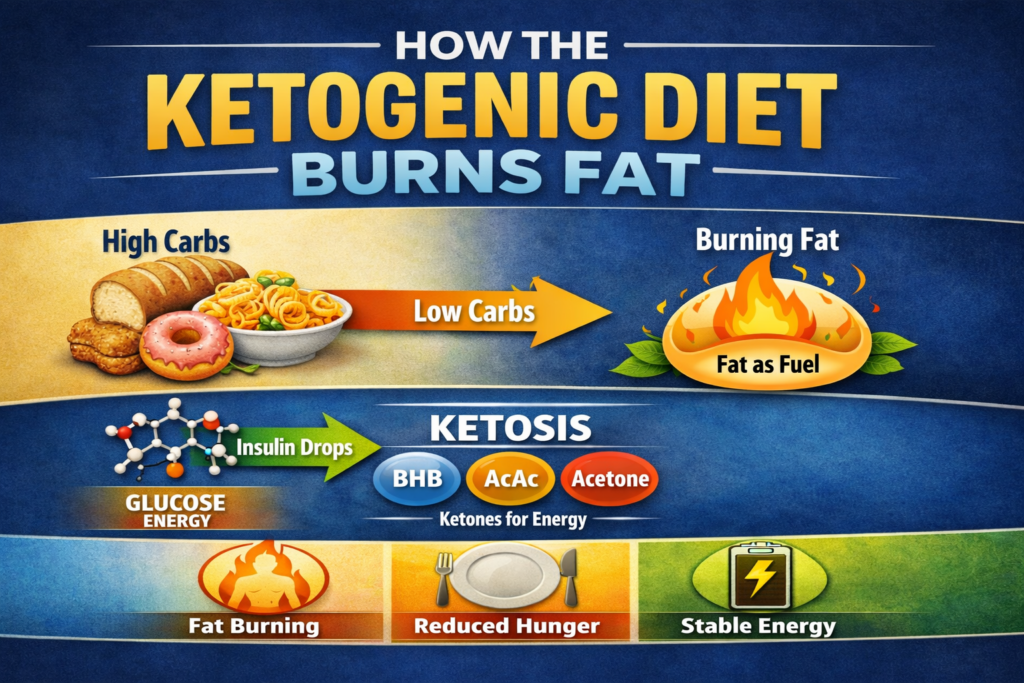
The Ketogenic Diet works by drastically reducing carbohydrate intake, forcing the body to enter Ketosis. In ketosis, the body shifts from using glucose as its primary fuel source to burning stored fat and producing ketones for energy. This metabolic change can increase fat oxidation, stabilize blood sugar, and reduce hunger.
Introduction
One of the most common questions people ask before starting keto is simple:
“How does the ketogenic diet actually work?”
Many people know that keto is a low-carb diet that helps with fat loss. But the real reason it works goes much deeper than simply eating fewer carbohydrates.
The ketogenic diet changes how your body produces and uses energy.
Instead of relying on sugar from carbohydrates, your metabolism shifts to burning fat as its primary fuel source. This metabolic switch triggers a chain of biological changes that can support fat loss, appetite control, and improved energy stability.
But understanding the science behind this process helps explain why keto works differently from traditional diets.
In this complete guide, we’ll break down:
- how the ketogenic diet affects metabolism
- what happens inside the body during ketosis
- why fat burning increases on keto
- and what the science says about long-term results
By the end, you’ll understand exactly why the ketogenic diet can be such a powerful tool for fat loss.
What Is the Ketogenic Diet?
The Ketogenic Diet is a nutritional strategy that dramatically reduces carbohydrate intake while increasing fat consumption.
Typical macronutrient ratios look like this:
| Macronutrient | Percentage |
|---|---|
| Fat | 70–75% |
| Protein | 20–25% |
| Carbohydrates | 5–10% |
This shift forces the body to enter Ketosis, a metabolic state where fat becomes the main source of fuel.
Instead of depending on glucose from carbohydrates, the body begins producing ketones from stored fat.
What Happens When You Stop Eating Carbs?
When carbohydrate intake drops significantly, the body begins depleting its glycogen stores and lowers insulin levels. As glucose becomes scarce, the liver starts converting fat into ketones, which serve as an alternative energy source for the brain and muscles.
Glycogen Depletion
Carbohydrates are stored in the body as glycogen, mainly in the liver and muscles.
Each gram of glycogen binds approximately three grams of water.
When carbs are restricted:
- glycogen stores become depleted
- water stored with glycogen is released
- the body begins searching for an alternative fuel source
This is why many people experience rapid weight loss during the first week of keto.
However, the real metabolic transformation begins after this phase.
What Is Ketosis?
Ketosis is a metabolic state where the body produces ketones from fat to use as energy when glucose availability is low.
Ketosis occurs when carbohydrate intake is low enough that the liver begins producing ketone bodies.
The three main ketones produced are:
- acetoacetate
- beta-hydroxybutyrate
- acetone
These molecules circulate through the bloodstream and provide energy for:
- the brain
- muscles
- organs
This metabolic shift allows the body to use stored fat as fuel, which is why keto can support fat loss.
Why Keto Increases Fat Burning
When the body enters ketosis, several metabolic changes occur.
Lower Insulin Levels
Carbohydrates trigger insulin release.
Insulin’s main function is to help cells absorb glucose and store excess energy as fat.
When carbohydrate intake drops:
- insulin levels fall
- fat storage signals decrease
- the body begins accessing stored fat for energy
Lower insulin is one of the key mechanisms behind keto-related fat loss.
Increased Fat Oxidation
Fat oxidation refers to the process of breaking down fat molecules to produce energy.
During ketosis:
- fat oxidation increases
- the body becomes more efficient at using fat as fuel
- stored body fat becomes a primary energy source
This metabolic shift explains why many people experience sustained fat loss on keto.
Appetite Regulation
One surprising effect of keto is reduced hunger.
Many people report feeling naturally less hungry while following the Ketogenic Diet.
Possible reasons include:
- stable blood sugar levels
- ketones influencing appetite hormones
- higher protein and fat intake
Reduced hunger often leads to lower calorie intake without intentional restriction.
What Happens During the First Weeks of Keto?
The body goes through several adaptation stages.
Week 1: Glycogen Depletion
- rapid water weight loss
- increased urination
- temporary fatigue
This stage is often called the keto adaptation phase.
Week 2–3: Ketone Production Increases
- liver produces more ketones
- fat oxidation increases
- hunger begins decreasing
Energy levels may start improving.
Week 3–4: Fat Adaptation
During this stage:
- the body becomes efficient at burning fat
- cravings decrease
- energy levels stabilize
Fat loss typically becomes more consistent during this phase.
The Role of Insulin in Fat Storage
Insulin plays a central role in metabolism.
When insulin levels remain elevated:
- fat burning slows
- fat storage increases
By reducing carbohydrates, keto naturally lowers insulin levels.
Lower insulin helps the body transition into fat-burning mode.
Is the Science Behind Keto Supported by Research?
Many scientific studies have examined the effects of the Ketogenic Diet.
Research suggests keto may support:
- weight loss
- improved blood sugar control
- appetite regulation
- metabolic health
While results vary from person to person, the metabolic mechanisms behind ketosis are well understood in nutritional science.
Conclusion
The Ketogenic Diet works by fundamentally changing how the body produces energy.
By drastically reducing carbohydrate intake, the body enters Ketosis, where fat becomes the primary fuel source.
This metabolic shift can:
- increase fat burning
- stabilize blood sugar
- reduce hunger
- support sustainable weight loss
Understanding the science behind keto helps explain why many people find this diet easier to maintain than traditional calorie-restricted approaches.
Rather than fighting hunger constantly, keto changes the body’s fuel system.
And when the body learns to burn fat efficiently, fat loss often becomes much easier to maintain.
FAQ
How does the ketogenic diet burn fat?
The ketogenic diet reduces carbohydrate intake, forcing the body to enter ketosis and burn stored fat for energy instead of glucose.
How long does it take to enter ketosis?
Most people enter Ketosis within 2–4 days after significantly lowering carbohydrate intake.
Does keto reduce hunger?
Many people experience reduced hunger on keto due to stable blood sugar levels and the appetite-regulating effects of ketones.
Is ketosis safe?
For most healthy adults, ketosis is considered safe when the diet includes balanced nutrition and whole foods.
Related Posts
If you’re exploring how keto works, these guides will help you understand the diet even deeper.
• What Is the Keto Diet? A Simple Beginner’s Guide
• Keto for Beginners: What to Eat, What to Avoid, and Why
• Net Carbs Explained: How to Read Food Labels Like a Keto Expert
• How Fast Can You Lose Weight on Keto? What to Expect in 30 Days
Deixe um comentário