
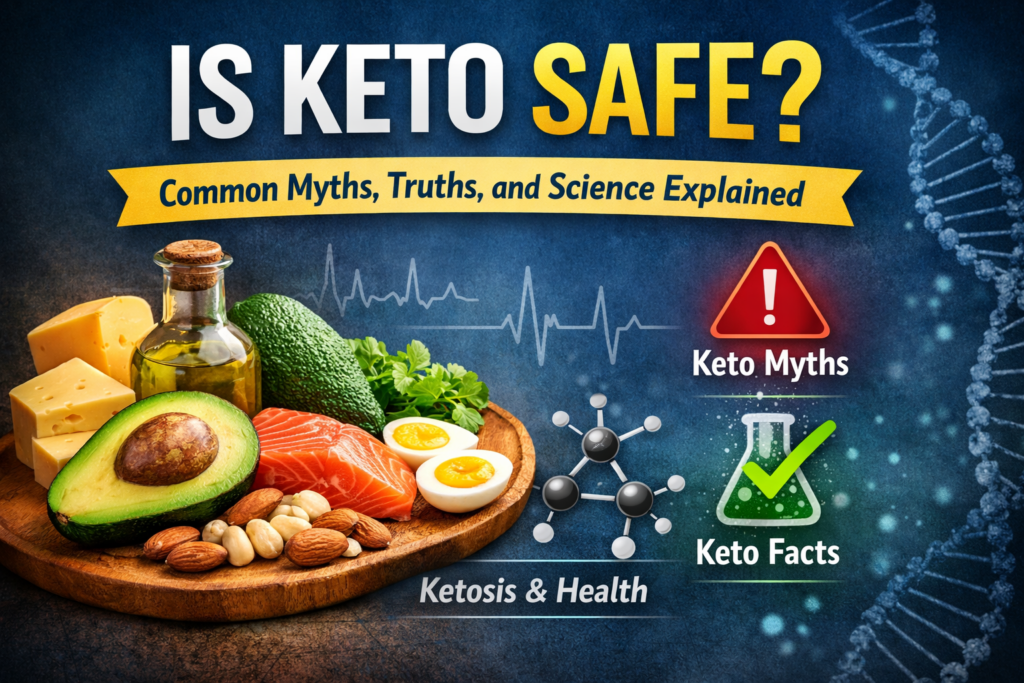
Is the keto diet safe?
The Ketogenic Diet is generally considered safe for most healthy adults when followed correctly. The diet works by reducing carbohydrate intake and shifting the body into Ketosis, where fat becomes the main source of energy. Research suggests keto may support weight loss, improve blood sugar control, and reduce appetite. However, individuals with certain medical conditions should consult a healthcare professional before starting the diet.
Introduction
The ketogenic diet has become one of the most popular nutrition strategies for weight loss and metabolic health. Millions of people follow keto to burn fat, stabilize blood sugar, and improve their overall lifestyle.
However, despite its popularity, many myths and misconceptions continue to circulate online. Some claim keto is dangerous, unsustainable, or harmful to the body.
These concerns often come from misunderstandings about how the diet actually works.
The truth is that the Ketogenic Diet has been studied for decades and was originally used as a medical nutrition therapy. Understanding the science behind ketosis helps separate myths from facts.
In this guide, we will explore common concerns about keto, what the research says, and whether this diet is safe for long-term use.
What Is the Keto Diet?
The Ketogenic Diet is a low-carbohydrate, high-fat diet designed to change how the body produces energy.
Normally, the body relies on glucose from carbohydrates as its primary fuel source. When carbohydrate intake is drastically reduced, the body begins producing molecules called ketones from fat.
This metabolic shift is known as Ketosis.
In ketosis, the body becomes more efficient at burning fat for energy instead of relying primarily on carbohydrates.
Common Myths About the Keto Diet
Myth 1: Keto Is Dangerous for Your Health
One of the most common myths is that keto is inherently unsafe.
In reality, keto has been used medically for decades, particularly in neurological treatments and metabolic research. When balanced with whole foods and proper nutrition, many individuals follow keto safely.
However, as with any diet, individual needs may vary.
Myth 2: Keto Means Eating Only Fat
Another misunderstanding is that keto requires extremely high fat intake without balance.
While fat becomes the primary energy source, a well-structured keto diet still includes:
• healthy fats
• moderate protein
• low-carbohydrate vegetables
• nutrient-dense whole foods
This balance helps support overall health and nutritional adequacy.
Myth 3: Keto Damages Your Metabolism
Some critics claim keto slows metabolism or harms long-term metabolic health.
Research suggests that ketosis actually changes how the body uses energy by encouraging fat oxidation. For many people, this can support improved metabolic flexibility.
What Science Says About Keto Safety
Numerous studies have examined the effects of the ketogenic diet on weight, metabolism, and blood sugar control.
Research indicates potential benefits such as:
• weight loss support
• improved insulin sensitivity
• reduced hunger and cravings
• more stable energy levels
These effects are largely related to the metabolic shift that occurs during Ketosis.
That said, long-term health outcomes depend heavily on food quality, lifestyle habits, and individual health conditions.
Who Should Be Careful with Keto?
Although the Ketogenic Diet is safe for many people, certain individuals should consult a healthcare professional before starting.
This includes people with:
• existing metabolic disorders
• kidney conditions
• specific medication needs
• pregnancy or breastfeeding considerations
Personalized medical guidance ensures dietary changes are appropriate for individual health circumstances.
Conclusion
The ketogenic diet is often surrounded by myths and misinformation. While concerns about safety are common, scientific research shows that keto can be safe for many healthy adults when followed responsibly.
By reducing carbohydrates and shifting the body into Ketosis, keto changes how the body produces energy and may support weight loss, appetite control, and metabolic health.
Like any dietary approach, success depends on balanced nutrition, consistency, and individual health considerations.
Understanding the science behind keto helps people make informed decisions rather than relying on myths or misconceptions.
FAQ
Is the keto diet safe long term?
For many healthy adults, the keto diet can be followed long term when it includes nutrient-dense foods and balanced nutrition.
Is keto safe for beginners?
Yes, many beginners start keto successfully by gradually reducing carbohydrates and focusing on whole foods.
Can keto cause health problems?
Most people tolerate keto well, but individuals with certain medical conditions should consult a healthcare professional before starting.
How long does it take to enter ketosis?
Most people enter Ketosis within 2–4 days after significantly reducing carbohydrate intake
Related Posts
If you want to better understand how the keto lifestyle works and how to apply it successfully, explore these helpful guides.
👉 Continue reading:
• Keto for Beginners: What to Eat, What to Avoid, and Why
• Net Carbs Explained: How to Read Food Labels Like a Keto Expert
• Keto vs Low Carb: What’s the Real Difference for Fat Loss?
• How Fast Can You Lose Weight on Keto? What to Expect in 30 Days
These articles will help you build a deeper understanding of the Ketogenic Diet and make smarter choices on your keto journey.
Deixe um comentário