
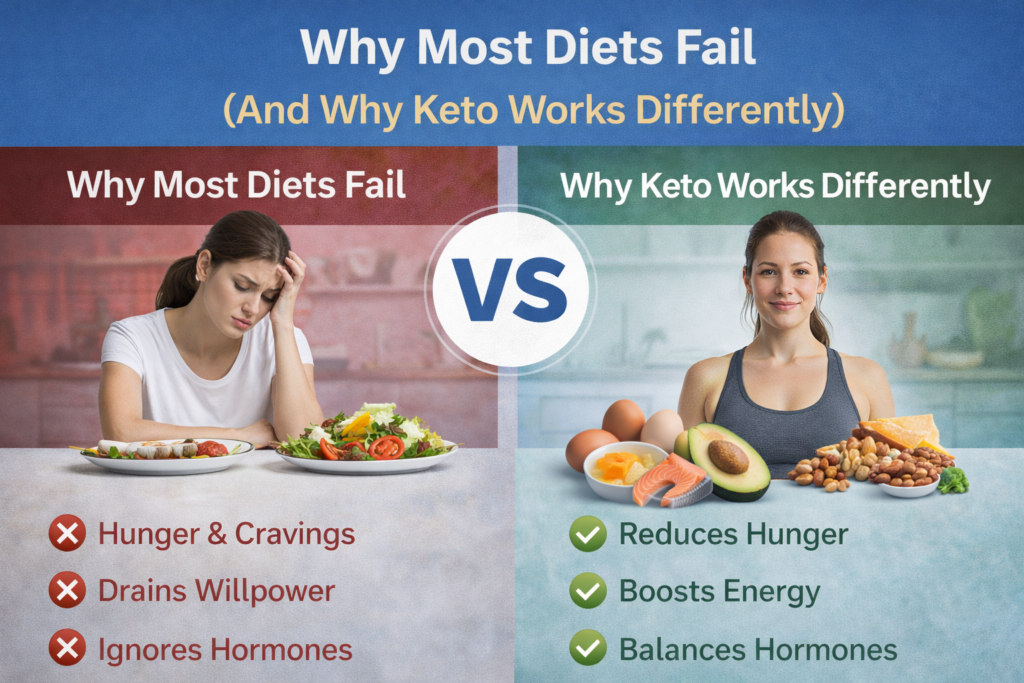
Why do most diets fail while keto works differently?
Most diets fail because they rely on strict calorie restriction and constant willpower, which can lead to hunger, cravings, and unsustainable eating habits. The keto diet works differently by reducing carbohydrates and shifting the body into Ketosis, a metabolic state where fat becomes the primary energy source. This shift may help stabilize blood sugar, reduce cravings, and make fat loss easier to maintain.
Introduction
Every year, millions of people start a new diet hoping to lose weight and improve their health.
Yet the reality is discouraging: most diets fail within a few months.
People begin motivated, follow strict rules, count calories, and try to stay disciplined. But over time, hunger increases, cravings become stronger, and the diet becomes harder to maintain.
Eventually, many people return to their previous eating habits — often regaining the weight they lost.
This cycle is so common that researchers often refer to it as the dieting loop.
The reason many diets fail is not necessarily a lack of effort. Instead, it often comes down to how those diets affect the body’s metabolism, hunger hormones, and energy balance.
The Ketogenic Diet takes a different approach by changing how the body produces energy. Instead of relying primarily on carbohydrates, keto shifts metabolism toward burning fat.
Understanding this difference helps explain why some people find keto easier to maintain compared to traditional dieting methods.
Why Most Diets Fail
Most traditional diets focus on one main principle: eat fewer calories than you burn.
While calorie balance does matter, relying only on calorie restriction can create several problems.
1. Constant Hunger
Low-calorie diets often leave people feeling hungry throughout the day.
When the body receives less energy than it expects, hunger hormones such as ghrelin increase. This makes it difficult to stay consistent over long periods.
Eventually, hunger becomes overwhelming and the diet becomes unsustainable.
2. Blood Sugar Spikes and Crashes
Many traditional diets still include high amounts of refined carbohydrates.
These foods can cause rapid increases in blood sugar followed by sudden drops in energy levels.
When blood sugar drops, the body signals hunger again — even if you recently ate.
This cycle can lead to frequent cravings and overeating.
3. Overreliance on Willpower
Most diet plans assume people can simply rely on discipline to eat less.
However, long-term weight loss is rarely sustained by willpower alone.
Environmental triggers, emotional stress, and hormonal signals often overpower strict dieting rules.
4. Metabolic Adaptation
Another reason diets fail is metabolic adaptation.
When calorie intake drops significantly, the body sometimes responds by slowing metabolism to conserve energy.
This can make continued weight loss more difficult over time.
How the Keto Diet Works Differently
The Ketogenic Diet approaches fat loss from a metabolic perspective rather than focusing solely on calories.
Instead of drastically reducing food intake, keto changes how the body fuels itself.
1. The Body Switches to Fat as Fuel
When carbohydrates are reduced to around 20–50 grams per day, the body begins producing ketones.
This metabolic state is known as Ketosis.
In ketosis, fat becomes the primary source of energy for the body and brain.
2. Appetite Often Decreases
Many people notice that hunger naturally decreases when following a ketogenic diet.
High-fat foods tend to be more satisfying and help maintain stable energy levels.
This can lead to a natural reduction in calorie intake without constant hunger.
3. Blood Sugar Becomes More Stable
Because keto drastically reduces sugar and refined carbohydrates, blood sugar fluctuations become less frequent.
Stable blood sugar levels often lead to fewer cravings and more consistent energy.
4. Fat Burning Becomes More Efficient
When insulin levels decrease and fat becomes the primary fuel source, the body becomes more efficient at using stored fat for energy.
For some individuals, this metabolic shift may support steady fat loss over time.
Keto vs Traditional Dieting
The difference between keto and traditional dieting often comes down to metabolic strategy.
Traditional dieting focuses on:
• calorie restriction
• portion control
• willpower
Keto focuses on:
• carbohydrate reduction
• metabolic fuel switching
• hunger regulation
Both approaches can support weight loss, but keto changes the body’s energy system, which may make it easier for some people to maintain long-term consistency.
Conclusion
Most diets fail not because people lack motivation, but because traditional dieting often ignores how the body regulates hunger, energy, and metabolism.
Constant calorie restriction can lead to hunger, cravings, and metabolic slowdown — making long-term success difficult.
The ketogenic diet takes a different approach by reducing carbohydrates and shifting the body into Ketosis, where fat becomes the main source of fuel.
For many people, this metabolic shift helps stabilize energy levels, reduce cravings, and make fat loss more sustainable.
Consistency and understanding how your body responds to different foods are key factors in achieving long-term success.
FAQ
Why do most diets fail?
Most diets fail because they rely heavily on calorie restriction and willpower. This can lead to hunger, cravings, and difficulty maintaining the diet long term.
Why is keto different from traditional diets?
Keto focuses on reducing carbohydrates and shifting the body into ketosis, where fat becomes the main energy source.
Does keto help reduce cravings?
Many people report fewer cravings on keto because the diet stabilizes blood sugar and promotes satiety through higher fat intake.
Can keto lead to long-term weight loss?
When followed consistently and combined with balanced nutrition, keto may support sustainable weight loss for some individuals.
Related Posts
If you want to understand the keto lifestyle more deeply and make better decisions about your diet, these articles can help you continue learning.
Each guide explores an important aspect of the Ketogenic Diet and can help you build a stronger foundation for long-term success.
👉 Keep reading:
- Keto for Beginners: What to Eat, What to Avoid, and Why
A complete introduction that explains how the keto diet works and which foods support ketosis. - Net Carbs Explained: How to Read Food Labels Like a Keto Expert
Learn how to calculate net carbs correctly and avoid hidden carbohydrates in everyday foods. - Keto vs Low Carb: What’s the Real Difference for Fat Loss?
Discover the key differences between keto and standard low-carb diets and how they affect weight loss. - How Fast Can You Lose Weight on Keto? What to Expect in 30 Days
A realistic breakdown of what typically happens during the first month of keto.
Exploring these guides will help you understand how ketosis works and how to apply the keto diet in a practical and sustainable way.
Deixe um comentário